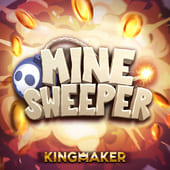
Minesweeper - PHWIN Minesweeper Game Guide
Minesweeper is a clue-led cards game: reveal a square, read its number, and use nearby information to decide which spaces are safe. On PHWIN, the compact Minesweeper format is easy to understand on a phone while still rewarding calm observation.
The short answer is simple: begin with a careful reveal, mark likely mines, and only take the next step when the surrounding clues support it. This Minesweeper guide explains the board, the choices, and a sensible way to approach a Minesweeper Demo before you decide whether to continue.
A clear board, visible clues, and a measured pace make Minesweeper approachable for a first session.
Minesweeper choices: what each clue tells you
Minesweeper becomes manageable when every number is treated as information rather than a prediction. A number identifies how many hidden mines touch that square, including diagonally adjacent spaces. A blank area normally signals room to expand, while a high number means that the next reveal deserves extra care. The most useful first principle is to compare a clue with the covered spaces around it.
Players who want a broader introduction to the PHWIN platform can use the PHWIN Guide for account and game basics before returning to Minesweeper. The board itself remains the focus here: clues, marks, and deliberate reveals.
Minesweeper features that make a round easy to scan
Minesweeper is at its best when the interface keeps the decision visible. These features help separate useful board information from distracting noise, and they also make it easier to compare Minesweeper with other quick card-style choices on PHWIN.
Minesweeper compared with another quick card choice
Minesweeper asks you to build a conclusion from several clues, so it suits players who prefer a puzzle-like rhythm. A title such as Iron Dome card action may feel more immediate and reaction-led. Neither approach replaces the other: choose Minesweeper for local deduction, or compare the other format when you want a different tempo while browsing PHWIN games.
This difference is also useful when selecting a session length. A Minesweeper board can be paused between decisions, while a faster round may invite more frequent actions. Keeping the distinction clear helps you choose based on attention and time rather than on a promise of a result.
Minesweeper beginner notes for a confident first board
New players do not need to memorize a large strategy book. The safest starting habit is to slow the first few reveals, identify a simple number pattern, and keep a consistent meaning for every mark. Minesweeper rewards a clean record of what is known, what is likely, and what is still unknown.
- Start at the edge only with a reason: an edge has fewer neighbors, which can simplify a clue, but it is not automatically safer.
- Separate facts from guesses: a square is confirmed only when the surrounding numbers account for every adjacent mine or safe space.
- Recheck old flags: new reveals can prove that an earlier assumption was wrong, so update marks instead of protecting them out of habit.
- Keep the session comfortable: adjust your pace for the phone screen, use a stable connection, and take a break when attention drops.
- Use a demo to learn the interface: a Minesweeper Demo can show how revealing, marking, and resetting work before any decision about continued play.
For a first visit, read the board as a small logic exercise rather than a race. The purpose of a Minesweeper Demo is familiarization: notice the controls, test how a flag behaves, and learn where the current clue state is shown. That preparation makes a later Minesweeper session calmer and more intentional.
Remember that a clear explanation is not a guarantee. Minesweeper still contains hidden information, and no visual pattern can promise a particular outcome. Set a personal limit, keep choices within that limit, and leave the board when the session no longer feels focused.
Minesweeper for a short break or a focused session
If you have only a few minutes, Minesweeper works well as a contained, clue-by-clue activity: open the board, review the local pattern, make a considered reveal, and stop at a natural checkpoint. If you have more time, use the same routine but take a wider scan after every cluster. In both situations, the direct answer is to match the board size and your pace to the attention you actually have.
Minesweeper play now: a clear decision point
Use the call to action when the decision context is right: you understand the grid, you know how you will mark a likely mine, and you have chosen a reasonable stopping point. That preparation gives the PHWIN Minesweeper experience a useful structure without pretending that a strategy can remove uncertainty.
Minesweeper related cards for your next choice
These additional cards games are shown from the PHWIN catalog. Select an icon to open the gaming destination; the names and images identify the available titles.